Group Analytic Therapy
I offer psychotherapy for individuals, couples, and groups, as well as reflective practice, teaching, and consultation informed by group analysis. My approach is relational, psychodynamic, and socially aware, with particular attention to trauma, power, culture, race, gender, sexuality, class, and belonging.
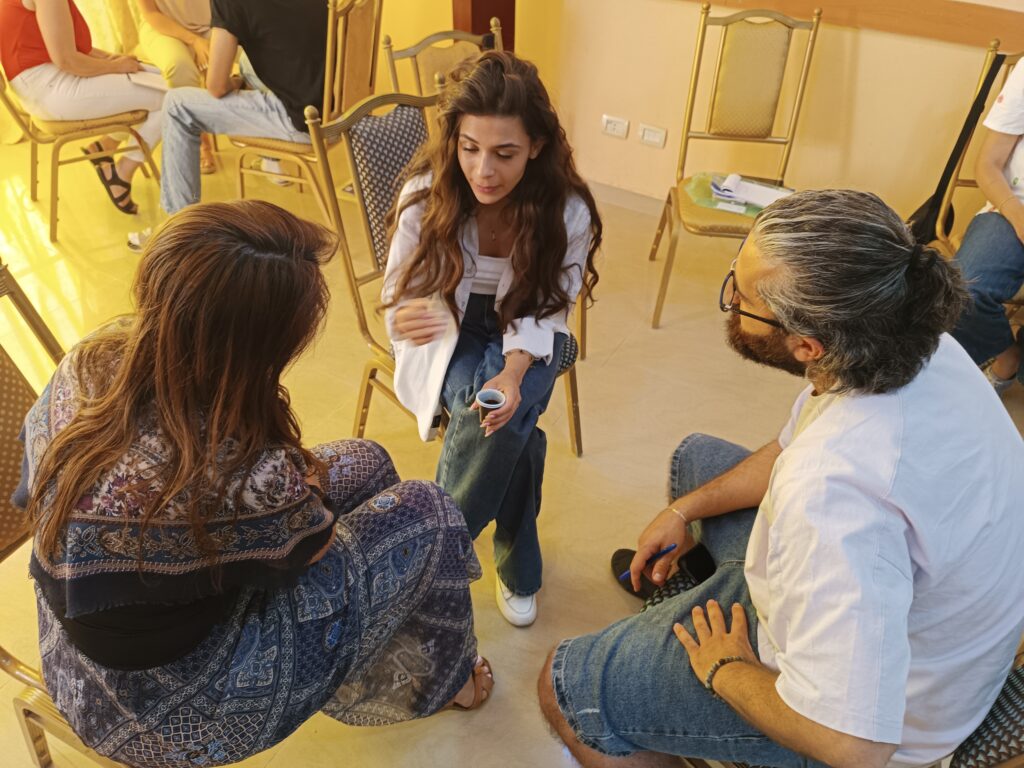
A Relational and Group-Analytic Approach
Group analysis begins from a simple but far-reaching insight: we become who we are in relationship. Our inner lives are shaped not only by family and intimacy, but also by institutions, histories, cultures, and social worlds. Many of our struggles are therefore not simply private problems. They are expressions of the relational fields in which we live.
This makes psychotherapy more than symptom management. It becomes a space in which people can begin to understand how their histories live in the present, how patterns of feeling and relating have taken shape, and how greater freedom might emerge through reflection, encounter, and new experience.
Even in one-to-one work, I remain attentive to the wider matrix of relationships and social meanings that shape a person’s life. In couples and groups, this becomes even more visible. Group analysis offers a rich way of thinking about intimacy, conflict, recognition, exclusion, longing, authority, and the ways we carry one another in mind and body.
A Decolonial and Intersectional Psychotherapy
A defining feature of my practice is a decolonial and intersectional orientation to psychotherapy.
I do not assume that distress can be understood apart from history, culture, and power. Nor do I treat dominant Euro-Western therapeutic models as culturally neutral or universally sufficient. Psychic life is shaped by colonial history, racialisation, migration, gender, sexuality, class, disability, religion, and the unequal distribution of dignity, safety, and recognition.
An intersectional approach recognises that suffering rarely travels along a single axis. A person’s experience of anxiety, shame, trauma, relational difficulty, or dislocation may be shaped by multiple and overlapping dimensions of identity and power. A decolonial approach asks deeper questions about whose knowledge is legitimised, which forms of pain are made visible, and how therapeutic spaces may unconsciously reproduce the exclusions of the wider world.
In practice, this means I try to create a space in which social reality is neither denied nor reduced to ideology. Questions of race, whiteness, masculinity, migration, structural violence, sexuality, and belonging can be thought about as part of psychic life itself. For me, this is not an optional add-on. It is part of serious, ethical psychotherapy today.
What I Offer
My work in this area includes: individual psychotherapy; couples therapy; group therapy; reflective practice for professionals and teams; consultation informed by group analysis; and teaching and training on group process, relational life, and the emotional dynamics of institutions
I work with people facing anxiety, depression, grief, shame, trauma, relational difficulty, identity questions, exclusion, burnout, professional impasse, and the emotional demands of care, leadership, and creative life.
My Clinical Style
I work with seriousness, warmth, and depth. I aim to create spaces that are containing enough for honest exploration and open enough for something alive to happen.
I pay close attention to what is present in the room, including what is spoken, what is difficult to speak, and what may be shaping the relational field more quietly or unconsciously. I am interested not only in insight, but in lived relationship: how we defend ourselves, how we seek recognition, how we expect others, and how new forms of contact become possible.
My wider background in psychotherapy, group process, nonviolence, contemplative practice, and education gives this work a broad and integrative quality. I am particularly interested in the relationship between inner life and social life, and in how therapy can help people inhabit themselves more truthfully.
Reflective Practice, Teaching, and Consultation
Alongside psychotherapy, I offer reflective practice, teaching, and consultation for practitioners, educators, leaders, and organisations.
My present and past roles with the Institute of Group Analysis and Turvey have included teaching, training leadership, and facilitating reflective spaces in which professionals can think more deeply about groups, authority, transference, conflict, culture, and the emotional life of institutions.
These spaces can be especially valuable in therapeutic, educational, artistic, and organisational settings where people carry complexity on behalf of others. Group-analytic thinking often helps illuminate not only individual experience, but also the wider patterns of projection, silence, tension, and belonging shaping a team or institution.
Selected Experience
- Qualified Groupwork Practitioner and Group-analytic Psychotherapist with the Institute of Group Analysis (London), trained at Group Analysis North (Manchester)
- Convenor of the Foundation Certificate in Group Analysis and lecturer at Turvey Groupwork and Adjunct Faculty for the Diploma in Reflective Practice in Organisations at the IGA
- Former board member and trustee at the Institute of Group Analysis, where I also chaired the Steering Committee for the Decolonising the Curriculum Project
- Former Whiteness Reading and Reflection Group Facilitator for Disrupting Whiteness; trained In White Affinity Group Facilitation by Prof. Robin DiAngelo
- Extensive experience facilitating reflective practice in clinical, educational, and organisational settings
Invitation
If you are looking for psychotherapy, reflective practice, or teaching informed by group analysis and shaped by a decolonial, intersectionally aware approach, I would be glad to hear from you.